- Contact Us Now: (601) 948-4444 Tap Here To Call Us




How to Beat a DUI in Mississippi: Defenses That Actually Get Used


Understanding What "Beating" a DUI Really Means

No lawyer can promise a result in a DUI case. Every case turns on its own facts, on how strong the evidence is, and on how the court applies the law. Under Mississippi Rule of Professional Conduct 7.1, lawyers may not create unjustified expectations about outcomes. Be careful of anyone who claims otherwise.
That said, DUI defense here follows a clear structure. Defense lawyers check the case at every stage. They look for weak spots in the state's proof. The most common lines of defense include:
- Challenging the traffic stop – Was the officer's reason for pulling the driver over legally sufficient?
- Challenging field sobriety evidence – Were the roadside tests given the right way and scored the right way?
- Challenging chemical-test evidence – Was the breath or blood test done the way the rules require?
- Challenging procedural compliance – Did the officer follow the state's implied-consent law at each step?
The goal is not magic. The work is a careful review of the state's case at every link in the chain. When proof is weak, or was not gathered the right way, the defense may file motions to keep it out. The defense may also cast doubt on it at trial. The result turns on the facts of each case.
Challenging the Traffic Stop
The Fourth Amendment requires an officer to have reasonable suspicion of a traffic violation or criminal activity before pulling someone over. State courts have dealt with this rule in DUI cases. It is often the first thing a defense lawyer checks.
DUI arrest reports tend to give one of a few reasons for the stop. One is a traffic offense the officer saw, such as speeding or crossing the center line. Another is an equipment fault like a broken taillight. Erratic driving, or a sobriety checkpoint, may also be the reason. Each reason has its own proof demands.
If the stop had no lawful basis, what the officer found next may be open to attack. That takes in roadside tests and chemical test results. Defense counsel reads the officer's stated reason for the stop. They watch the dashcam or body-camera video. They also read any backup records, such as radar logs.
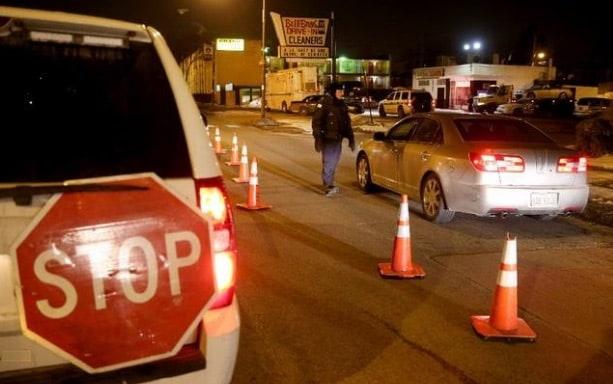
Sobriety checkpoints are permitted in Mississippi, but the rules governing them come from court decisions rather than a statute. Defense lawyers ask whether a supervising officer approved the roadblock. They check whether it followed a neutral plan for stopping cars. They look at whether the signs and safety steps were in place. Gaps in the roadblock's paperwork can be the basis for a motion to keep the proof out.
The stop is the foundation of the entire case. If it falls, much of what follows may fall with it.
Field Sobriety Test (FST) Challenges
The National Highway Traffic Safety Administration built three standard roadside tests. These are the Horizontal Gaze Nystagmus test, the Walk-and-Turn test, and the One-Leg Stand test. Each test has set rules for how it must be given. Straying from those rules can weaken the results.
Defense lawyers look at several parts of how the tests were run:
- Officer training. Was the officer trained and cleared to give the standard roadside tests the way NHTSA spells out?
- Test setting. Were the tests given on a level, dry surface with enough light? Gravel shoulders, sloped pavement, and poor light can skew how a driver does.
- Health and body factors. Did the officer allow for inner ear trouble, leg or back injuries, weight, age over 65, or shoes like heels? Each of these can throw off balance.
- Scoring. Did the officer score the set clues NHTSA lists, or just go on a hunch that the driver had failed?
Officers sometimes give tests that are not standard. These include saying the alphabet backward or counting drills. Such tests have no tested scoring rules behind them. They tend to carry less weight as proof.
One key point: roadside tests measure balance and split attention. They do not measure blood alcohol. A person may do badly for reasons that have nothing to do with alcohol. Defense counsel may make that point to attack the test results.
Intoxilyzer 8000 Procedure and Challenges
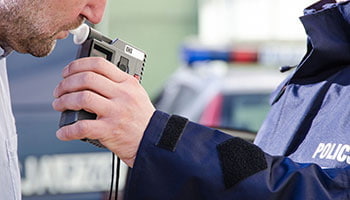
Mississippi uses the Intoxilyzer 8000 as its breath-testing machine for court. Under Mississippi's implied-consent framework, a chemical analysis of breath must be performed according to methods approved by the Mississippi Forensics Laboratory and the Commissioner of Public Safety to be considered valid. It must be performed by an individual holding a valid permit issued by that laboratory. The statute also requires the Mississippi Forensics Laboratory to make periodic tests of breath-testing devices. Testing must occur at least quarterly. That is a check on how well they work.
A breath analysis test must not be given within fifteen minutes of consumption of any substance by mouth. This waiting period exists to prevent mouth alcohol from contaminating the sample. Defense counsel asks whether the officer watched the driver the whole time. They check whether the driver burped, threw up, or put anything in their mouth.
Beyond the fifteen-minute wait, defense attorneys typically request and review:
- Calibration and maintenance records from the Mississippi Forensics Laboratory
- The operator's permit and whether it was still in force at the time of the test
- Match between test samples – whether the readings fell close enough to each other
Several things can skew a breath test. They include acid reflux, ketosis from diabetes, mouth alcohol left behind, and radio waves from nearby devices. Defense counsel may raise any of these, based on the facts of the case.
Under Mississippi law, a person tested may have a qualified professional of their choosing administer an independent test approved by the Mississippi Forensics Laboratory. The driver pays for this test. The failure to obtain this additional test does not bar admission of the officer-directed test. But a second result that clashes with the Intoxilyzer reading can carry real weight.
Blood-Draw Chain of Custody
Blood draws in Mississippi DUI cases tend to happen when a breath test will not work. That can mean a bad crash, a trip to the hospital, or a drug other than alcohol. When an accident results in a death, Mississippi law requires a chemical test of the driver, and any blood withdrawal must be administered within two hours of the accident if possible. The time of the accident and the time of the withdrawal must be recorded.
The chain of custody traces a blood sample from the draw to the lab result in court. Each link matters. Who drew the blood? Mississippi law allows any qualified person to withdraw the blood at a law enforcement officer's request. What kit was used? Defense counsel checks whether the kit held the right preservative and clotting blocker. How was the sample sealed and labeled? Broken seals, missing labels, or names that do not match raise doubts about contamination or a mix-up. How was it moved and stored? Blood samples must be kept in the right heat range. Bad storage can let the sample ferment, which can lift the alcohol reading. Who handled it at the lab? Each person who touched the sample must be logged. Gaps in the chain give the defense a way to attack the result.
Mississippi law requires the analysis to follow methods the Mississippi Forensics Laboratory has approved, performed by someone holding a valid permit from that laboratory. Defense counsel also checks that the lab is accredited and that the analyst was qualified to do the work.
For non-consensual blood draws, the U.S. Supreme Court's decision in Birchfield v. North Dakota (2016) established that a warrant is generally required before compelling a blood draw. Defense lawyers ask whether the police had a valid search warrant. They check whether any exception to the warrant rule applied.
Implied Consent and Refusal Issues
Under Mississippi law, any person who operates a motor vehicle on Mississippi's public roads is deemed to have given consent to chemical testing. The testing may be of breath, blood, or urine to determine alcohol concentration. This is Mississippi's implied-consent law.
If a person refuses the breath test, the officer must inform the person that refusal will result in suspension of driving privileges. The Commissioner of Public Safety may impose the suspension only after finding the driver was told of that consequence. Under Mississippi law, the suspension period for refusal is ninety days if the person has no prior DUI conviction or nonadjudication. The suspension period is one year if there is a prior conviction or nonadjudication. Under Mississippi law, evidence of the refusal is also admissible in the criminal case.
A refusal triggers specific procedural steps. No test is given. The officer must take the driver's license and give a receipt for it. The officer must inform the driver that refusing subjects them to suspension of driving privileges. The officer must forward the license with a sworn report to the Commissioner of Public Safety. The report must state the officer's reasonable grounds and the fact of the refusal. These requirements appear in Mississippi law regarding refusal procedures.
Defense angles on refusal issues include:
- Was the statutory warning properly given? If the officer failed to inform the driver of the consequences, the administrative suspension may be challenged.
- Was the response actually a refusal? Confusion, language barriers, or medical inability to provide a sample may not constitute a true refusal.
- Did the officer have lawful grounds to request the test? The officer must have had reasonable grounds and probable cause, as required under the statute.
Other Procedure and Evidence Defenses
Other defenses may come up, based on the facts of a case. They rarely stand alone. They can back up the main attacks on the stop, the roadside tests, and the chemical proof.
Miranda issues. If an officer conducted a custodial interrogation without providing Miranda warnings first, statements made by the accused may be suppressed. The key question is whether the driver was in custody and being asked questions at the time.
Rising-BAC arguments. Alcohol takes time to soak into the blood. A driver's reading at the station may be higher than it was behind the wheel. Defense counsel may show that the reading was still on the way up. It may have been under the legal limit while the driver was still on the road.
Health problems that look like drinking. Some health problems cause signs that look like impairment. They include diabetic episodes, nerve disorders, lack of sleep, and allergic reactions. Slurred speech, an unsteady walk, and confusion can all have a health cause and no link to alcohol.
Discovery violations. Under Mississippi law, a tested person or their attorney may request full information about the test in writing. If the prosecution fails to produce required discovery – dashcam footage, maintenance logs, calibration records – defense counsel may seek sanctions. The court may exclude that evidence.
Speedy trial issues. Delays in prosecution that are not caused by the defense may give rise to constitutional challenges under the Sixth Amendment.
Why Working With a Mississippi DUI Attorney Matters
DUI defense in Mississippi involves overlapping legal proceedings. The criminal case moves through municipal, justice, or circuit court. A separate administrative license action proceeds through the Department of Public Safety. Evidentiary rules govern whether chemical-test results and field sobriety evidence are admissible. Each proceeding has its own deadlines and procedures.
A defense attorney handles the work at each stage. The attorney reviews the officer's arrest report and discovery materials. They file motions to suppress improperly obtained evidence. They request Intoxilyzer maintenance and calibration records from the Mississippi Forensics Laboratory. They cross-examine the arresting officer and lab analysts. They advise the client on whether to pursue trial or negotiate a resolution.
Every case is different. The strength of available defenses depends on the specific facts. It depends on the evidence the state can produce. It depends on the procedural history. An attorney who focuses on DUI defense can identify which challenges apply. They can present them effectively.
Speak With a Mississippi DUI Defense Attorney
If you are facing DUI charges in Mississippi, the facts of your case matter. Vic Carmody, Jr., P.A. offers consultations to review the circumstances of your arrest. We discuss the evidence against you. We outline potential defense strategies that may apply to your situation.
Time is a factor. Mississippi DUI cases involve both a criminal proceeding and an administrative license action. A refusal suspension takes effect thirty days after the date of the notice. If the Commissioner of Public Safety sustains it, Mississippi law allows ten days to petition a court for review. Missing that deadline could affect your driving privileges.
Contact Vic Carmody, Jr., P.A. to discuss your DUI case. Every case depends on its own facts. No outcome can be promised. But understanding your options is the first step.

Frequently Asked Questions
Can a DUI Charge Be Dismissed in Mississippi Before Trial?
A DUI charge may be dismissed before trial if the defense successfully challenges the evidence through pretrial motions. For example, if a motion to suppress eliminates the chemical test results, the prosecution may lack sufficient evidence to proceed. If a motion to suppress also eliminates the traffic stop evidence, the case may be dismissed. Whether dismissal is possible depends entirely on the facts and evidence in each case.
What Happens if I Refuse the Breath Test in Mississippi?
Under Mississippi law, refusing a breath test triggers an administrative license suspension. For a person with no prior DUI conviction or nonadjudication, the suspension lasts ninety days. For a person with a prior conviction or nonadjudication, the suspension lasts one year. The refusal may also be admitted as evidence in the criminal case under Mississippi law regarding admissibility of refusal. However, defense counsel may challenge whether the refusal was properly documented and whether the statutory warnings were given.
Can Field Sobriety Test Results Be Challenged in Court?
Yes. NHTSA sets standardized protocols for how these tests are administered. If the officer deviated from those protocols, the results may be challenged. If the officer administered the tests in poor conditions, the results may be challenged. If the officer failed to account for the subject's medical conditions, the results may be challenged. Non-standardized tests generally carry less weight than the three NHTSA-approved tests.
How Reliable Is the Intoxilyzer 8000 Breath Test?
The Intoxilyzer 8000 is the approved instrument in Mississippi. But its results are only as reliable as the procedures used to operate and maintain it. Defense attorneys examine the fifteen-minute wait Mississippi law requires after anything is taken by mouth. They review the machine's calibration records and the operator's certification. They assess whether factors like acid reflux or mouth alcohol could have affected the reading.
Do I Need a Lawyer for a First-Offense DUI in Mississippi?
A first-offense DUI carries potential fines, jail time, license suspension, a criminal record, and a mandatory alcohol safety education program. Under Mississippi law, a first offense may result in fines between two hundred fifty dollars and one thousand dollars. It may result in imprisonment up to forty-eight hours, or both. The court must also order the alcohol safety education program within six months of sentencing. A first-offense conviction brings a one-hundred-twenty-day license suspension unless the person obtains an interlock-restricted license. While some first offenses may qualify for nonadjudication under certain conditions, navigating these options requires understanding of Mississippi's implied-consent framework. Consulting an attorney can help you understand what defenses may apply to your situation.