- Contact Us Now: (601) 948-4444 Tap Here To Call Us




Your Rights During DUI Stops and Investigation



Understanding Your Constitutional Rights During DUI Stops
When an officer begins a DUI stop in Mississippi, the U.S. Constitution and state law govern the situation. DUI rights in Mississippi are not favors from law enforcement; they are legal protections you can use to limit the evidence the state collects against you. If you end up facing a DUI criminal case in Mississippi, what you say and do at the roadside will follow you into court.
The state DUI law explains Mississippi’s rules for drunk driving. Our overview shows how officers investigate these cases. Together, these elements create the framework for how law enforcement should conduct a Mississippi DUI stop and investigation.
The right to remain silent
You never have to help the officer build a case against you. The Fifth Amendment protects your right to remain silent about anything that others could use as evidence.
At a Mississippi DUI stop, you must:
- Identify yourself and provide license, registration, and proof of insurance.
You do not have to:
- Answer questions about where you were, who you were with, or what you drank.
- Estimate how many drinks you had or what time you stopped drinking.
- Explain why you look tired, upset, or unsteady.
The safest approach is to calmly say something like:
- “I am choosing to remain silent.”
- “I would like to speak with a lawyer before answering any questions.”
After that, stop talking. Do not try to talk your way out of the stop, joke with the officer, or argue about the situation. Officers will quote anything beyond basic identification later in police reports and at trial.
Authorities require Miranda warnings only after you are in custody and undergo interrogation. Officers can ask questions before that point without reading your rights, which is another reason to keep answers to a minimum until you have spoken with a Mississippi DUI lawyer.

Protection from unreasonable searches and seizures
The Fourth Amendment controls how the police can stop you, detain you, and search you or your vehicle. These rules apply whether the encounter starts with a minor traffic violation or a serious crash.
For a traffic stop to be legal, the officer must have at least reasonable suspicion that you violated a traffic or criminal law. That can include speeding, failing to maintain a lane, an equipment problem, or specific signs of impairment. If the officer has no real basis for the stop, an experienced attorney may later ask the judge to suppress DUI evidence in Mississippi that flowed from the illegal stop.
Once you are pulled over, the officer’s authority is limited:
- They may order you and your passengers to remain in or step out of the vehicle for safety.
- They may visually inspect the interior of the car.
- They may pat down your clothing only if they reasonably suspect you are armed and dangerous.
- They may not rummage through bags, closed containers, or the trunk unless they have probable cause or your consent.
You can say, “I do not consent to any searches.” Say it clearly and do not change your answer even if the officer pressures you. Consent searches are one of the most common ways people lose their Fourth Amendment protection.
DUI passenger rights in Mississippi are similar. A passenger generally does not have to answer questions about where the car was going or who was drinking. Passengers can refuse consent to search their own bags and can tell the officer they wish to remain silent and speak with a lawyer.
The right to a lawyer
Once you are formally under arrest, your Sixth Amendment right to counsel becomes critical. From that point forward, you should clearly state, “I want to speak to a lawyer.”
After you invoke this right:
- Officers should stop questioning you about the incident.
- You should not discuss the facts of the case with anyone except your attorney.
- You should avoid making phone calls from the jail that describe what happened, because the jail records the calls.
Invoking your rights early enables a DUI refusal attorney in Mississippi to challenge how the investigation was handled and what evidence the state can use.

Field sobriety tests: voluntary roadside exercises
Most people do not realize that standard field sobriety tests – the walk-and-turn, one-leg stand, and eye-tracking test – are voluntary. There is no separate charge in Mississippi for refusing these physical coordination tests.
Key points about field tests:
- You can decline to perform them.
- The officer will almost never explain that you can refuse.
- These tests are highly subjective and are often “failed” by sober drivers who are nervous, overweight, injured, or unsteady for unrelated reasons.
If you politely refuse, you may say, “I respectfully decline to perform field tests.” Defense attorneys in Mississippi often focus on the officer’s training, the administration of the tests, weather and road conditions, medical issues, and the actual content of the video compared to what appears in the police report during field sobriety test cases.
Chemical tests and the Mississippi implied consent law
Chemical testing – breath, blood, or sometimes urine – is different from roadside balance tests. The Mississippi implied consent law states that lawfully arrested drivers for DUI agree to chemical testing. Refusing a breath or blood test can trigger a separate Mississippi DUI license suspension through the Department of Public Safety.
You should understand how this works before deciding what to do:
- A breath or blood test failure can give the state a precise blood alcohol concentration number to use at trial.
- A refusal often results in a longer administrative suspension, even if the authorities later reduce or dismiss the criminal charge.
- The prosecution can mention your refusal to the jury as evidence that you were trying to hide impairment.
For more information, see our pages on Mississippi implied consent law and Mississippi DUI penalties. A Breath test refusal lawyer in Mississippi will evaluate not just the test result, but also whether the arrest and request for testing were lawful in the first place.
A blood test DUI lawyer in Mississippi can challenge how someone drew, stored, labeled, and analyzed blood, and whether hospital staff or crime lab employees followed required procedures.
Challenging breath and blood testing procedures
Even when you take a test, the result is not automatically reliable. A Breathalyzer defense lawyer in Mississippi can examine:
- Whether the testing machine was properly maintained and calibrated.
- Whether the officer followed required observation periods before the test.
- Whether mouth alcohol, medical conditions, or certain products could have affected the reading.
In addition, you may request an independent blood test at your own expense after the state’s test. Preserving a sample for independent analysis plays an important role in building a record that can later help challenge DUI test results in court.
Dashcam DUI evidence in Mississippi and body-worn camera video can be just as important. These recordings often show whether instructions were clear, whether you actually stumbled, and how the officer treated you during the stop.
How long can officers detain you?
Officers should not let a traffic stop last any longer than necessary to handle the reason for pulling you over. The U.S. Supreme Court’s decision in Rodriguez v. United States makes clear that officers cannot prolong a completed traffic stop just to look for evidence of other crimes without reasonable suspicion.
In practice, that means:
- Once the officer has finished tasks like checking your license, running your information, and writing a ticket or warning, they cannot delay the stop just to wait for backup, call a drug dog, or fish for DUI evidence unless they can explain specific facts that justify extending the encounter.
- If the officer drags out the stop with unrelated questions or “stalling” while waiting for more officers or equipment, a court may rule that the police must suppress any evidence gathered after that point.
When a stop runs too long without a good legal reason, an attorney can challenge the timeline and argue that the authorities should throw out everything after the illegal delay.
DUI checkpoints and roadblocks
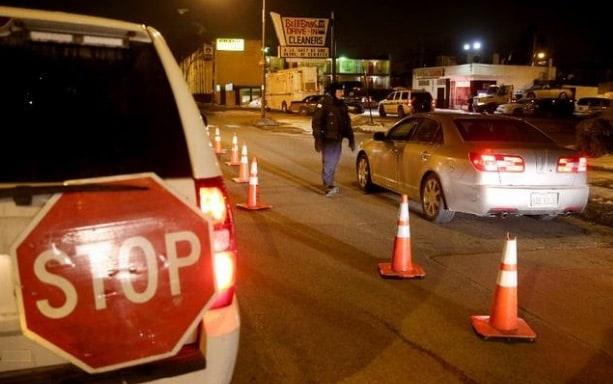
Mississippi allows DUI checkpoints when police follow strict rules about planning, notice, and how drivers are stopped. If a checkpoint fails to follow those rules, the stop may violate the Fourth Amendment and Mississippi law.
Issues that a DUI checkpoint lawyer in Mississippi will review include:
- Whether a supervising agency approved the checkpoint in advance.
- Whether officers used a neutral formula for deciding which cars to stop.
- Whether signs, lighting, and safety measures clearly marked the checkpoint.
- Whether the stop was limited in time and scope rather than being used as a dragnet.
A sobriety checkpoint lawyer in Mississippi can challenge an illegal roadblock and ask the court to exclude all evidence that flowed from it.
Special concerns for minors and noncitizens
Underage DUI in Mississippi carries extra consequences because drivers under 21 face a lower legal alcohol limit and separate penalties. Education, future licensing, and scholarship opportunities can be affected.
Noncitizen DUI in Mississippi is also dangerous. Even a first DUI can create immigration problems for permanent residents, work-visa holders, and undocumented people. Criminal and immigration lawyers need to coordinate so that protecting a client’s driver’s license does not accidentally trigger detention or removal proceedings.
Using your rights during and after the stop
You cannot control how officers behave, but you can control your own actions. To protect your DUI traffic stop rights, focus on a few key steps.
During the stop:
- Stay calm, keep your hands visible, and be respectful.
- Provide your license, registration, and proof of insurance when asked.
- Politely state that you wish to remain silent and do not answer questions about drinking, drugs, or where you are coming from.
- Clearly say that you do not consent to any searches of your car, your person, or your belongings.
- Decide whether to perform field tests or take a chemical test only after considering the consequences, not because you feel pressured.
After an arrest:
- State that you want to speak to a lawyer and then stop discussing the case with officers.
- Do not talk about the facts of the incident on recorded jail calls or text messages.
- Write down everything you remember about the stop, including times, locations, statements, and witnesses.
- Save bond paperwork, temporary license forms, and any documents you receive from the Mississippi Department of Public Safety.
DUI court process in Mississippi can be complicated, with separate timelines for the criminal case and administrative license proceedings.

When to seek help
If you have been arrested after a Mississippi DUI stop or checkpoint, do not assume that the case is hopeless just because you blew over the limit or the officer says you failed field tests. A DUI checkpoint lawyer in Mississippi, a sobriety checkpoint lawyer in Mississippi, a breathalyzer defense lawyer in Mississippi, or a blood test DUI lawyer in Mississippi can evaluate the entire encounter from the first flash of blue lights to the last page of the lab report.
From challenging the basis for the stop and the length of the detention to attacking field tests, video, and chemical evidence, an experienced Mississippi DUI lawyer can use every available protection to limit the damage to your record, your license, and your future. Call us at (601) 948-4444 and set up a free initial consultation.