
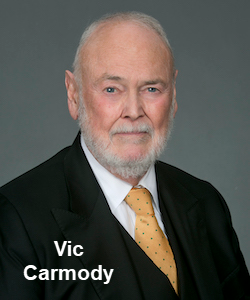
Vic Carmody, Jr.
First Call Attorney℠
First Call Attorney℠
Effective: April 2024




A substance abuse lawyer defends people charged with crimes tied to drug or alcohol use. These lawyers often work out treatment in place of jail time. The work sits where criminal defense meets addiction care – not civil commitment or rehab intake. If you face charges tied to drug or alcohol use, this focus can change how your case ends.
A drug and alcohol crime attorney in Mississippi handles drug possession and DUI charges. The same lawyer handles public intoxication, prescription fraud, and drug paraphernalia charges. These lawyers also defend probation violations that stem from a failed drug test. One thread runs through all of them: drug or alcohol use drives the crime. Courts now accept, more and more, that treatment may serve justice better than jail alone.
This role differs from general criminal defense in one key way. A substance abuse lawyer knows the state's drug court programs, pretrial diversion options, and the conditional discharge statute. That knowledge opens doors a general lawyer may not know are there. You gain from a lawyer who ties treatment to legal strategy and seeks the result the law allows in your case.
We handle the full range of drug and alcohol charges under Mississippi law. Penalties vary widely with the substance involved, the quantity, and your prior record. Here are the charges we defend most often.
Drug Possession charges arise when someone knowingly holds a controlled substance with no valid prescription. Penalties under the Mississippi Controlled Substances Act depend on the drug's schedule. Schedule I and II substances carry the most severe penalties. Schedule III through V offenses generally result in lighter sentences.
Possession with Intent to Distribute applies when the quantity, the packaging, or other evidence points to a planned sale or transfer. Under Mississippi law, selling or transferring a controlled substance is unlawful. It is also unlawful to manufacture, distribute, or dispense one. Possession with intent to do any of those things is equally unlawful. Trafficking thresholds trigger mandatory minimum terms. For example, thirty or more grams of a Schedule I or II drug other than marijuana or synthetic cannabinoids carries a ten-year mandatory minimum. A court may go below that floor only on narrow statutory findings.
DUI/DWI is one of the most common drunk driving charges. Under Mississippi law, driving under the influence is unlawful. A first offense draws a fine of at least two hundred fifty dollars and no more than one thousand dollars. Jail time may not top forty-eight hours. The court may order a fine alone, jail alone, or both. It must also order an alcohol safety education program, to be finished within six months of sentencing.
Public Intoxication charges can follow when a drunk person's conduct draws police notice in a public place. These are most often misdemeanors.
Prescription Drug Fraud covers obtaining controlled substances by forged prescriptions, doctor shopping, or other deceptive means. These cases often ride along with a possession charge and can be felonies.
Drug Paraphernalia possession is a misdemeanor under the controlled substances act. A conviction can mean up to six months in the county jail. A fine of up to five hundred dollars may also apply. The court may order a fine alone, jail alone, or both.
Probation and Parole Violations that stem from a failed drug test can start revocation and send you back to jail. A lawyer who knows these cases can push for more treatment instead, where the facts allow.
A documented addiction may count in your favor at sentencing. Courts here treat addiction as a mitigation and diversion issue, not as an affirmative defense to the crime. You cannot escape liability by saying addiction drove the act. But a judge may weigh a documented substance use disorder when choosing between jail and a treatment program.
If you are looking for a lawyer for disabling conditions like alcohol addiction, it helps to know how the law treats them. Addiction may help you qualify for drug court, conditional discharge, or non-adjudication. A substance abuse evaluation by a licensed professional can show how deep the disorder runs and name the right treatment. Courts often weigh that proof when they set a sentence.
The Americans with Disabilities Act may protect people in recovery from some forms of employment discrimination. Barriers to work are a common collateral consequence of a criminal charge. But the ADA does not excuse a crime. A person still using illegal drugs gets no ADA protection for that use.
In rare cases, defense lawyers raise a diminished-capacity claim where deep addiction shaped a defendant's state of mind. Such a claim leans hard on the facts and on the court. No Mississippi statute recognizes diminished capacity, so the claim rests on case law alone. Talk with a lawyer about your own facts to learn whether any of these paths fit.
Mississippi law provides several pathways to divert a drug or alcohol case away from jail. Drug courts, pretrial intervention programs, non-adjudication, and conditional discharge each give you a way to avoid a conviction. Each one asks for supervised treatment and strict compliance.
Eligibility generally requires a non-violent offense and no disqualifying prior record. The trade-off is significant. Courts may require supervised treatment, frequent drug testing, and judicial oversight. In return, finishing the program may get your charge dismissed or reduced. If you fail, your case returns to the regular criminal docket.
Drug courts here run as intervention courts under the state law that sets statewide drug court eligibility criteria. These specialized dockets aim at rehabilitation rather than punishment for people with a substance use disorder.
The process starts with screening. You apply, or a judge or lawyer refers you. Clinical professionals evaluate how severe the substance use disorder is. If you are accepted, you enter a structured program under close judicial supervision.
Drug court demands sustained effort. Participants must complete the treatment requirements the court imposes. You attend frequent status hearings. You submit to regular drug testing. The judge reviews your progress at each hearing. Sanctions for non-compliance may include more frequent testing, community service, or short jail stays.
Graduation requires sustained sobriety, completion of the treatment plan, and compliance with every condition the court imposed. Successful completion may result in dismissal of the charge or a significant reduction in penalties. Repeated positive tests, new arrests, or refusal to participate typically result in termination from the program. Your case then goes back to the standard docket for sentencing.
Non-adjudication lets some defendants avoid a conviction by meeting conditions the court sets. The court holds back on the guilty plea while you meet them. Those conditions may include restitution, community service, or drug or alcohol treatment. The supervision period may run up to five years in circuit or county court. Finish it, and the court dismisses the case.
A person who has used this law once cannot use it again. And a charge of trafficking, or a charge under the Mississippi Implied Consent Law, rules you out under this section.
Conditional discharge does a like job, but on a narrower set of cases. It reaches only first-time offenders found guilty of possession or paraphernalia charges under the controlled substances act. With your consent, the court may hold off on judgment and put you on probation for up to three years on fair terms. Finish, and the case ends in discharge and dismissal with no conviction. You may use this relief only once.
Non-adjudication rests on a guilty plea the court holds in abeyance. Conditional discharge is open after a guilty plea or after a trial. How either ends turns on your facts and on the judge who hears the case.

Hiring an addiction attorney starts with a thorough case assessment. Your lawyer will review the police reports, the arrest records, and any lab or chemical test results. That review turns up weaknesses in the state's case. An unlawful traffic stop, an improper search, an unreliable field test, or a flawed blood or breath test can all shape your defense.
One key early step is a substance abuse evaluation by a licensed professional. It sets out the kind of substance use disorder you have and how deep it runs. It also names a treatment plan. Courts lean on these reports when they weigh a treatment plea deal or a spot in a diversion program.
Your lawyer will work with treatment providers, probation officers, and prosecutors. The aim is to build a case for leniency where the facts support it. That may mean starting treatment before sentencing. Keep a record of what you attend and how you do. That evidence shows the court you are serious about recovery.
Motion practice is another key component. Your lawyer may move to suppress evidence seized in an unlawful search. Your lawyer may challenge the reliability of the field sobriety tests. Your lawyer may contest the accuracy of the chemical testing equipment. Challenges like these can reduce a charge or end the case.
Throughout the case, your communications with your lawyer stay protected by attorney-client privilege. That confidentiality matters a great deal here, given the sensitive nature of addiction and the personal details these files hold.
Drug court programs here vary from circuit to circuit. State law sets the floor for who may take part. But the treatment terms, and what each judge expects, differ from one courtroom to the next. An attorney who practices regularly in these courts understands those differences. That knowledge helps your case use every option state law gives you.

Familiarity with local prosecutors shapes case strategy. District attorneys in each circuit approach diversion and plea negotiations differently. Some offices run formal pretrial intervention programs. Others handle diversionary matters less formally. An attorney who knows those tendencies can tailor negotiations accordingly.
Relationships with regional treatment providers also matter. Courts want to see defendants engaged with credible, established programs. A lawyer who knows which providers the court respects can help you sign up with one that helps your case.
Knowledge of the state's controlled substances schedules is essential. Where a substance falls on Schedules I through V drives how severe the penalty can be. A lawyer who works in this field knows how the schedule shapes the charge, the plea options, and the sentencing range.
If you face drug or alcohol charges in Mississippi, moving early can save options that fade with time. A drug court slot, a lab-test challenge, and a strong plea position all depend on quick action.
Schedule a confidential consultation with Vic Carmody, Jr., P.A. to discuss your case. A lawyer can weigh your own facts. A lawyer can lay out your options under Mississippi law. A lawyer can help you pick the right path. Every case differs.
Addiction does not define your future. Call Vic Carmody, Jr., P.A. today, or use the online contact form, and take the first step toward guarding your rights and your freedom.
A dismissal is possible but never promised. Programs like conditional discharge and non-adjudication can end in a dropped charge if you finish them. Whether you qualify depends on the offense, your criminal history, and the specific facts of your case. An attorney can evaluate whether one of these alternatives is open to you.
Mississippi does not treat addiction as an affirmative defense that excuses a crime. But a documented addiction may count in your favor at sentencing. Courts may weigh a substance use disorder when they decide whether a treatment program fits. How much it helps turns on the facts and on the judge.
Mississippi law sets the statewide rules, and local programs may add their own. As a rule, drug courts take non-violent offenders who have a substance use disorder. A felony crime-of-violence conviction in the past ten years, or any prior trafficking conviction, rules you out. Screening looks at each applicant one by one. A lawyer who knows your local drug court's rules can tell you whether you qualify.
Non-adjudication reaches felony and misdemeanor cases other than crimes against the person, violent offenses, trafficking, and implied consent charges. Conditional discharge reaches only first-time possession or paraphernalia offenders. Non-adjudication holds a guilty plea in abeyance, while conditional discharge may also follow a trial verdict. Both end in dismissal if you finish, but the two have different entry rules and different watch periods.
Starting treatment before sentencing can help your position. Courts tend to read voluntary treatment as a sign you own the problem and mean to change. A record of treatment may back a bid for probation, diversion, or a lighter sentence. But the result still turns on the judge, the charge, and your case facts. A lawyer can tell you whether early treatment helps in your case.